







Bio-Derived Polymers for Mine Dust Control: Best Practices
Effective dust management is critical for modern mining operations. For many years, companies relied on synthetic binders or basic water applications. However, as health and safety protocols evolve, the industry is shifting toward more sustainable solutions. Bio-derived polymers are now leading this transition, offering a superior way to stabilize surfaces while protecting the environment.
Understanding Bio-Derived Polymers for Dust Control
Unlike synthetic binders, which often contain toxic petroleum compounds, these materials use natural, renewable byproducts like lignosulfonates. They act as organic adhesives that bind fine dust particles into a cohesive, durable surface. This matrix withstands heavy haulage traffic effectively. You can review the technical standards for dust control in the Safe Work Australia dust hazard guide. Because bio-derived polymers are derived from plant sugars and wood lignins, they integrate safely into the local soil chemistry.
Operational Advantages of Bio-Derived Polymers
Transitioning to a more natural approach offers three primary operational advantages for your site:
- Long-Term Durability: Synthetic binders often become brittle under extreme heat. In contrast, bio-derived polymers maintain molecular flexibility, which reduces the frequency of road maintenance.
- Safety and Non-Toxicity: Traditional chemical binders often threaten local water tables. Alternatively, these natural products ensure a safer work environment for your team.
- Sustainability: Recycled, bio-based byproducts lower your site’s environmental impact while helping you meet strict ESG targets by reducing the carbon footprint of water hauling.
The Science Behind Surface Stabilization
Dust control relies on strong particle-to-particle bonds. By applying a high-performance sustainable dust suppressant, you fill the microscopic voids between soil particles. The product cures and creates a hardened surface matrix. This prevents dangerous “fines” from becoming airborne and stops the structural degradation of the road base. Unlike water, which evaporates, bio-derived polymers remain in the surface to provide lasting protection.
Addressing Common Myths
Many site managers hesitate to switch from water, fearing that the technology is difficult to manage. First, some believe that bio-derived polymers require specialized, expensive machinery. In reality, modern solutions are designed for standard water cart deployment. Second, there is a myth that they are ineffective in high-traffic areas. However, the high bonding strength creates a surface that performs better under the compaction of heavy haul trucks than loose, unsealed dirt.
Best Practices for Application
Achieving maximum durability requires following specific site protocols. First, ensure the road surface is properly graded and free of loose debris before the initial application. Second, apply the solution at the recommended moisture content to ensure deep penetration into the soil matrix. Additionally, monitor traffic flow immediately after application to allow the surface time to cure fully. These small adjustments lead to significantly longer road life and reduced dust events. These products thrive when these simple application guidelines are followed.
The Financial ROI of Dust Management
Specialized binders may appear more expensive than water initially. However, the operational ROI is undeniable. Stabilized roads reduce water truck fuel consumption and minimize equipment wear. Furthermore, you will spend less time grading the roads. Adopting better technology requires no overhaul of your existing processes. Our formula works perfectly with your current equipment. Finally, please consult our Dust Suppressant Training document to learn the best application ratios for your specific site conditions.
Environmental Stewardship in Mining
As modern mining continues to evolve, the pressure to maintain a “social license to operate” is higher than ever. By utilizing bio-derived polymers, your operation demonstrates a commitment to sustainable resource management. This is not just about keeping the air clean; it is about preserving the surrounding vegetation, protecting local groundwater, and ensuring the health of everyone who works on the site. Taking these steps is an essential component of a forward-thinking ESG strategy.
Advanced Techniques for Bio-Derived Polymers
Beyond standard road dust suppression, bio-derived polymers can be utilized for tailings dam stabilization and stockpile management. By applying a concentrated layer, site managers can mitigate wind erosion over large areas without disturbing the site structure. This versatility makes them an invaluable asset for site-wide environmental management. Furthermore, the longevity of these treatments means fewer re-applications are needed during peak windy seasons.
Future-Proofing Your Haul Roads
Investing in the integrity of your haul roads is an investment in the efficiency of your entire site. When you reduce dust, you increase visibility and safety for all drivers. Moreover, you decrease the maintenance burden on your mechanical teams. As regulations tighten, being proactive with your choice of bio-derived polymers will keep your operations compliant and ahead of the curve. Consistency is key to long-term success.




 Imagine the first time you jumped into the water. Either that, or imagine the first time you jumped into a lake or the ocean. You hold your breath, you close your eyes, and you are sure that the result will be terrible. You are so afraid. Everyone is watching. You have to do it.
 New standards in company design are making the act of being eco friendly much easier than it used to be. Company design requires a total architecture, aesthetics, and color scheme to all be taken into consideration when coming up with the texture and feel for your business.
 The iceberg known as B31 broke off of an Antarctic glacier in November of 2013. Naturally, scientists from NASA and several international agencies have been keeping a close eye on it, even going so far as to drop quite a few GPS tracking devices onto it so that we can keep a better eye on it. You would think that something of this size would be easy to track, but many icebergs are difficult to tracking during the winter months, in the dark, and other various additional conditions.
 The Solheimar eco village in Iceland is only an hour outside of Reykjavik. It has only 120 residents, 40 of whom are special needs individuals. It has several small factories, a community geothermal pool, and many cool amenities which make it one of the friendliest, earthiest, and most eco friendly places which you could possibly find in Iceland, and that is saying a lot. Iceland is known for its eco friendly sustainability.
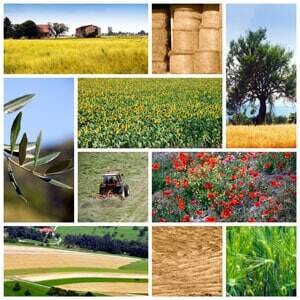 If you have been keeping up with reading all of your National Geographic and Smithsonian magazines, you know how important it is that the agricultural industry reduces its own carbon footprint and that it finds better, more sustainable ways of continuing, particularly since the global need for food may double by 3050 due to the population increase worldwide and the fact that developing nations are able to sustain themselves better and therefore have a higher quality preference for food.
 On the famous Animal Planet television channel, there is numerous programming for the Treehouse Master TV show, and Pete the expert travels all over the U.S. (and all over the world) looking for new and unusual tree houses and building custom tree houses for clients. There is something magical and primal about living in a tree house, even a custom built modern one, which appeals pretty deep to the human soul.
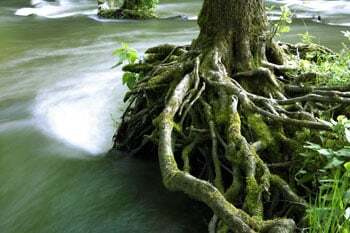 We have all wondered what really goes on under the ground, deep down in the dark, where the tree roots are. How big do those roots really go? What happens to them? Don’t underground animals gnaw into them? Are they bigger than the branches?
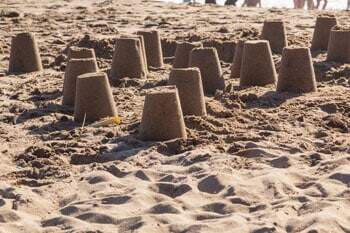 Do you remember making mud pies as a kid? Or, perhaps, you were a master sand castle builder. Whatever your childhood vocation, do you recall how creative and energetic you felt while you were doing it? Mud is easy to play with. Sand forms perfectly beneath your hands. You don’t need to have skill. You don’t need to have tools, or even extra materials. It is easy to play with and it washes off when you’re done. It’s even better than modeling clay! It doesn’t dry up or anything.